Friday, September 19, 2014

Lucky Strike


Lightning never strikes twice, or does it? Most football stars are unique, so that it’s usually impossible for one player to step seamlessly into the shoes of another. But it can happen. I’m trying to think of examples, and the first thought that springs to mind is that of Dalglish replacing Keegan during Liverpool’s glory years. Incredibly, it can also happen three times in a row, and I’m thinking Costa stepping into the shoes of Falcao at Atletico Madrid, after the Colombian had filled those of Forlan, who had perfectly stepped in for Torres. Hold on, that’s actually four times isn’t it?

Yet these seamless transitions are generally the exception and not the rule. After all, it takes a bit of time to repeat a winning cycle with a different set of players after one has just ended. Best thing you could probably do, once the cycle is over, is tear out the old spine and freshen things up. Just like Barca have done. It’s not necessarily going to work overnight, but it’s better than clinging to the tried and trusted for years on end for nothing.

AC Milan had an irritating habit of clinging to also-rans for too long, holding onto a player well past their sell by date. One department they have managed to replenish successfully, however, is that of the midfield anchorman.


Ours is a celebrity-obsessed age, where fresh-faced pin-up boys like Messi and Ronaldo take up all the limelight. I guess there’s nothing glitzier than a goal-getting, zippy forward, and the kids and girls go nuts for them. But give me a grizzled, word-weary destroyer anytime, one who’d rather do his dirty work in the shadows, with the occasional goal to remind us that he can play too. I’m thinking the likes of Vieira , Deschamps, Keane, Davids, Makelele, Cambiasso and - last but certainly not least - the modern day phenomenon that is Yaya Toure.

Many of today’s football managers often bemoan the paucity of world class strikers and central defenders. But I think that a world class midfield enforcer has become an even rarer species. Despite finally having the cash to splash, Arsene Wenger still finds himself restricted to the dubious choice between Flamini and Arteta, whilst Van Gaal would probably give his kingdom for a world class workhorse right now to shore up his side, given that Manyoo’s centre of midfield is still pure mush.

Sir Alex Ferguson once said that ‘the game is won in midfield’ at the highest level, and I couldn’t agree more. And midfield ball-winners are crucial to this, since they are the engine room which props up the fancy float. In fact I’d go as far as to say that I can tell a great side from the chaff by their midfield enforcer.


The most famous exponents of this role are always tremendous athletic specimens, who can also dabble in the dark arts whenever this is required. A bit of stamping on a tall player’s foot the moment the cross is taken, taking out the nippy striker early in the game to clip his wings a bit, harrying the temperamental winger so that he gets sent off, etc etc. Graeme Souness was a fine embodiment of this ruthless streak, and his handiwork when ‘looking after himself’ was simply jaw-dropping. Sir Alex Ferguson coached Souey when the former was Scotland manager, and said of him in his autobiography: ‘he could be cruel’.

Coming from a tough nut like Ferguson, that really says it all. But it is true that players were afraid to even get close to Souness, let alone take him on. This was partly the reason for Liverpool’s rampant success of the late 70s to mid-80s, but they also profited from Souey’s great leadership and quality. Which is why the ‘tigerish’ (to say the least) Scot was snapped up by Sampdoria in the Serie A - then the best league in the world - and played a big part in helping the blucerchiati to become a top side in both Italy and Europe.

People say that today’s footballers are no longer as tough as Souey’s generation. This is understandable when you think that most fans are bombarded daily with fresh-faced pics of metrosexuals like Beckham, Cristiano Ronaldo and Mario Gotze. But the great tradition of midfield hardmen has hardly been broken, with the likes of Davids and Gattuso firing up the Serie A in the noughties, and the Premiership dominated by the likes of Keane, Vieira, Makelele and Steven Gerrard.


The A-League also had its own hardmen, with the most infamous amongst them being Kevin Muscat. Never one to shy away from brutality, he made world headlines during his Socceroos days for a horrible, career-ending tackle on France’s Christophe Dugarry. After retiring from Australia, Muscat’s cruelty brought his glittering Australian club career to a premature end, when he hurled himself into the air with all studs up, all but ending the career of high-flying 20 year old and fellow Maltese-Australian Adrian Zahra (who subsequently required knee surgery and now plays with Maltese club Valletta, where he is not even first choice).

So it’s clear that these nutters are never confined to a single nation, although of late Holland appears to be the producer of the best exponents. The now retired Mark Van Bommel was the last great midfield destroyer, and he was pure filth on the pitch, resorting to anything to give his side the advantage. The first non-German to captain Bayern Munich (a Dutchman?!), MVB was a veteran of the ‘battle of Nuremberg’ which was fought (more than played) between Portugal and the Netherlands at the 2006 world cup in Germany, where the referee issued four red cards and sixteen yellows.

MVB somehow managed to earn a yellow in the eighth minute, signalling that the game wasn’t going to be a meeting of dainty feet. An injured Cristiano Ronaldo in fact left the field in tears, afterwards claiming that a Dutch defender had fully intended to injure him. Yet the most amazing thing about the ‘game’ was that MVB managed to avoid being sent off until he was substituted on the hour! All throughout his career, it was a feat that he managed time and time again, constantly committing the unspeakable and yet still managing to avoid being sent off. His audacity was quite something, and there’s also available footage of him pinching the privates of another player right under the nose of the referee, and still managing to escape sanction.


He was a fierce competitor and a huge athletic specimen, which is why Galliani was so desperate to bring him to AC Milan when Gattuso kept on breaking down to injury. In the first year that MVB joined them, AC Milan managed to win the their last scudetto, and following another season with them they offered him an extension, although he was already 35 years old. Despite his love for AC Milan, MVB moved back to Holland for family reasons, spending one last year with PSV, and was incredibly sent off during his last game.

But Milan were quick to secure an able deputy for MVB following his departure. Who was none other than his little sidekick in the Dutch national side’s midfield. Step forward Nigel de Jong, also a fearsome competitor and midfield anchorman, who has admirably filled the shoes of his evil mentor, and proved to be full of pace and strength in the tackle. He is also no retiring wallflower when it comes to cold-heartedness, as evidenced by his infamous ‘kung fu’ strike on Xabi Alonso at the 2010 world cup final, which left fans worldwide stunned by his luck at not being sent off.

Roll on four years, and de Jong is now a glorious veteran of the Dutch national side that reached the semis in Brazil 2014. He’s also the kingpin in Inzaghi’s midfield at AC Milan, following a summer of transfer speculation in which Man United’s new manager Van Gaal (who was Holland’s manager in Brazil) must have been desperate to reunite with NdJ at United, despite all the headlines about Juve’s Vidal and Pogba. Holding onto de Jong was probably AC Milan’s best business of the summer, and there is already talk of them offering him a new contract (which is a sign of immense estimation when you consider how stingy the club has become).


Following his last outing against Parma (where NdJ was a constant point of reference in AC’s midfield and chipped in with a coolly taken strike) you can be sure that the chequebook will already be waving in his agent’s face. And whilst Milan desperately seeks to shore up its woeful backline (they narrowly beat Parma 5-4, albeit away), head coach Inzaghi will at least be comforted that MVB’s shoes in midfield have been filled so amply by his compatriot. After all, every bit of de Jong’s quality will be needed in the impending clash against Juventus, when he should provide a sturdy challenge to the Old Lady’s powerful central midfielders.

Indeed lightning rarely strikes twice. Yet when it comes to filling the role of their midfield destroyer, AC Milan are certainly fortunate that it did.


Wednesday, September 10, 2014

Cinderella Men

The benefits of politics, married as they are to big business, are incidental. They are certainly not exclusively intended for the gain of the majority. Political changes are great movements that people throw themselves behind or latch onto depending on how it will benefit their individual circumstances.
 
Take the impending Scottish referendum on independence for example. If I was a purely objective pundit looking from the outside, I might think that voting 'aye' would be a slightly better alternative route for the population at large. Yet if I was a hard-nosed businessman who made his living from trading goods exclusively with England, and might risk incurring cross-border tariffs – in the event that an independent Scotland is not granted automatic EU accession - then of course I'd be front of the 'naw thanks' bandwagon.

But how the outcome of a political decision affects the majority for the better is often purely incidental, and irrelevant to the handful of powerbrokers causing the great political headwinds in the first place.
 
And speaking of Scotland, a political decision was recently taken that might incidentally also lift the country’s profile, as well as other nations who have been lurking in the football wilderness for a while now. The Tartan Army's darlings were once a mainstay in international soccer tournaments, when their fans cheered all and sundry with their bagpipes and kilts, before being sent home early by one rubbish side after another.

Yet dire as Scotland were on the pitch, their colourful and peaceful fans were always missed when they were gone, and proof of the wonderful diversity that exists within the United Kingdom itself, let alone the entire continent of Europe. After all football is a celebration and not just a sport, a means to break down the barriers between us, leaving us to revel in our differences before and after the game is played out.


This week Scotland pushed Germany all the way in Dortmund, narrowly losing out 2-1 in a display that was both inspiring and spirited. Their first eleven are still a bit rubbish, yet the gusto with which the Scots entered the fray would have left William Wallace beaming.

I guess it doesn't take much to raise your game against the current world champions, but I think there was more to their performance than just that. Because psychology is everything in sport, and nothing gives a player a greater spring in his step than the genuine belief that a prize is in sight. And what greater prize could the Scottish football team give its long-suffering army of fans, than automatic qualification for Euro 2016.
 
Which has all been made possible, of course, by UEFA President Michel Platini's decision to expand the Euros from 16 to 24 teams. This decision has gone on to divide the football world like the independence campaign has divided Scottish voters. And whenever faced by a polarising issue, I like to strain my ear towards all arguments both for and against. And my final conclusion is that Platini's decision has not been a good one. It has been EFFING AWESOME! Why on earth didn't UEFA think about this before?!
 
The naysayers are falling over themselves to shout that the decision was taken in favour of greater political expediency, in that Platini expanded the tournament to endear himself to a larger number of national associations. Of course it was taken for greater political expediency! Politics is what UEFA does right?

The only problem with political expediency is if a decision is taken which manifestly benefits the few to the detriment of the many. 'But this is also the case!' argue the 'no movement' because now the quality of the football at the Euros will be 'watered down'!
 
Watered down?
 
Since when did bloody football turn into a fine Chardonnay?
 
How readily do people forget that Europe is the cradle of football, and deserves a bigger tournament. What’s wrong with throwing in another eight sides? More national associations will take some money home from the bonanza, and who loses out of all this?

Some pundits have gone on to whinge that the best third placed sides in the group stage will now qualify for the knock-out stages of the finals tournament, but why is this an issue? This used to happen all the time at the world cup until the number of qualifying nations were expanded in 1998. Third placed sides like Argentina went on to reach the final in 1990, as did third placed Italy in 1994!


Football is in a state of constant flux, and giving a side every possible opportunity to survive in a tournament is a cracking idea. Can you seriously say that the present England team boasting a more experienced Raheem Sterling and young John Stones are the exact same side that foundered at the last world cup? Not to mention Italy with Conte at the helm and the likes of Immobile and Zaza firing up its attack? A week can be a long time in football, just like it can be in politics. You never know when a young player might appear out of nowhere to give his national side a new dimension.

Which is not to mention that traditional ‘big sides’ are also known to have sudden dips in form. Take Brazil, who went from being Confederations Cup champions and dead-certs to win the last world-cup to no-hopers in the space of a few months. And what of Spain, whose ‘European favourites’ tag got shredded to ribbons after just a couple of group games against Holland and Chile? Sudden peaks in form are also possible, and if Ribery returned to the French side, could you seriously take them to be the same toothless proposition when faced with top-level opposition?
 
And how patronising an argument is it to say that only a small elite of 'big sides' should be represented, and that other national teams are just window dressing?! Has everyone forgotten Denmark in Euro ‘92, who were pulled off the beaches to replace a war-torn Yugoslavia and ended up winning the bloody tournament against world champions Germany? And that, I remind you, was achieved without the phenomenal Michael Laudrup in their number, who was bent on boycotting the team!

An achievement which was incredibly overshadowed Greece at Portugal '04, a team that never won a game at a major football tournament? Roundly expected to be the whipping boys in their group, they went on to beat Figo and Cristiano Ronaldo's Portugal both in their opening game and in the final, whilst also knocking out Zidane's France and Nedved's Czech Rep in between.


The whole history of the tournament is littered with these Cinderella stories, which people all too easily forget. Just like they forget that the Euros is a massive sporting event, second only to the World Cup and even bigger than the Olympics! The reason? Football is insanely popular in Europe, and almost every national side except Gibraltar can give you a run for your money. You only have to look at the recent upset achieved by minnows Albania in Portugal this week to know that everything is up for grabs in a competitive fixture.
 
But if the purists really think that the inclusion of more sides in the Euros is going to somehow 'weaken' the tournament, then why don’t they just ignore the competition until it reaches the quarter final stages. Who's stopping them? It’s true that if they turn their sights back on the tournament at the later knock-out stages, they might see an unexpected British side in there, or a plucky little Balkan nation.

I wonder what they'd think then? They'll probably view these sides as some sort of aberration or gate-crasher, who should not have a seat at the last eight table, before turning their attentions to other 'bigger' teams instead.

Yet others like me shall revel in cheering on the plucky underdog, in the forlorn hope that another ‘smaller side’ might follow in the footsteps of previous Cinderella men.


Thursday, September 4, 2014

Ulysses Found

An eighth placed finish last season left AC Milan a long way from home. A home that is a European spot, at a minimum. The rossoneri’s is a history which places them at the pinnacle of European football, since the seven European Cups in their trophy cabinet means their haul is second only to Real Madrid's ten.

Memories flood the mind of their two European Cup wins in the noughties, and the heady days of glory in the late 80s to mid-90s, when AC were the undisputed kings of the world. But the landscape has completely changed. No longer is AC a champion wearing the best armour that money can buy, stepping out into the arena with the biggest sword, ready to sow mayhem and seize glory. They now find themselves a straggler reduced to rags, slowly getting back to their feet after the civil war between Adriano and Barbara. It’s a place of little certainty, for a team trying its hardest to find its way back home.

Things used to be straightforward and simple. They would face their rivals on the field with the best resources at their disposal. But AC’s greatest obstacles now lurk both within and without, as the football landscape changes at the speed of light. A global demand for the game looms larger every year, and if things were hard for Italian clubs in the noughties, they’ve clearly not gotten any easier. TV rights and foreign owners have rendered other leagues more attractive, and Real, Barca and Bayern are now every player’s top three destinations of choice. AC have long lost a guaranteed place amongst this elite. As Liverpool and then Man United discovered, today’s gen Y and i players have no time for history. As far as they’re concerned you either play in Europe or you’re as good as dead.

So it’s still not looking like plain sailing, and there’s few gods in their corner. Cliché as it may sound, AC’s return home is going to be one treacherous Odyssey full of twists and turns. And in view of the choppy seas which lie ahead, what better commander to stand with his foot upon the wind-battered prow than Ulysses himself?


A thought which takes me back to late Sunday nights spent in front of the box, watching fat Italian pundits on RAI and Mediaset channels, laboriously dissecting the events of the Serie A matchday amid a zillion replays. The passion with which they spoke was unrivalled, yet they were possessed of such corpulence that you wondered if they even walked from their seat to the gents without getting a lift in a car. Amongst their number was inevitably the presence of a solitary stunning showgirl, who was generally expected to look pretty and flash the odd nod and smile. If she ever got to give her own view on the events of the day, it was instantly met with nodding that was even more animated than usual, as well as the odd condescending smile.

Chauvinistic stuff, but also a delightful platform for great calcio debate. In which one of the discussions once centred upon the two best Italian strikers at the time: cross-town rivals Christian ‘Bobo’ ‘Aussie’ Vieri of Inter, and Filippo ‘Superpippo’ Inzaghi of AC. An Inter supporter was hotly contesting the gamesmanship of Superpippo, using it to argue that Vieri was the better striker. To which another pundit calmly countered that the difference in playing styles was not being appreciated by the accuser, for whilst Vieri was an Achilles (built like a tank and possessed of a blistering shot), Inzaghi had no choice but to be a Ulysses.

The point will not be lost on lovers of myth, that whilst Achilles was by far the greater warrior, it was Ulysses who devised the downfall of Troy and also found his way back home. Homer portrayed him as a hero who always had his eye on the prize, and who used his wits and guile at all times to make up for any shortfall in his physical abilities.

It was a fitting analogy, and one that I love. Anyone who watched Inzaghi the player knows that his first touch could be poor, complemented by average pace and zero dribbling skills. The purists often dismissed him throughout his career, in which the slight lad from Piacenza made a mockery of the qualities often associated with the out and out striker. Some described him as a ‘coat hanger’, always dangling off the back of the opposition’s last man, and always itching to seize upon a loose ball. A quality which led Sir Alex Ferguson to famously remark that Superpippo was ‘born offside’.


Yet Pippo was worth his weight in gold when it came to yielding the hard currency of football. He remains the all-time Italian goalscorer in European competition, and second only to Raul in its scoring charts. Never has there been witnessed a greater lust for goalscoring opportunities, with many often branding Inzaghi as both selfish and greedy.

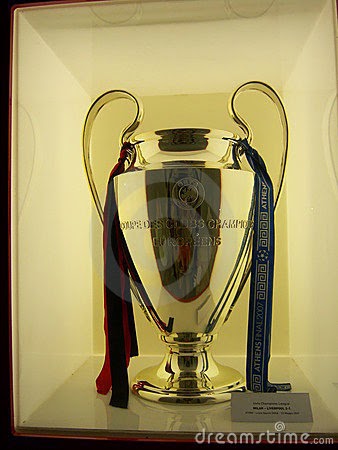
It was once said that ‘greed is good’, but it was not greed alone that rocketed Pippo into the stratosphere. If he had few gifts, the greatest was certainly that of being in the right place at the right time. Cue the Champions League final between AC and Liverpool in 2007, a game that was to prove Pippo’s swansong at the top level. AC had an absolute stinker of a game, yet Pippo (chosen ahead of Gilardino although he was still injured) only had to get on the end of two balls for AC to win 2-1 and secure their last European Cup. Those that knew him were not surprised, for he had been a ‘fox in the box’ (to borrow a phrase from Arsene Wenger) for over ten years, using his guile and low cunning to overcome the seemingly impossible.

Some still call it luck. But if Pippo’s positional sense was just down to fortuna, it was married to other qualities that set him apart as a player. His determination to prove doubters wrong saw him hit the ground running upon his joining Juventus from Atalanta (where he had been Serie A’s top scorer), with him and Del Piero scoring for fun in the Serie A, thereby ridiculing the traditional wisdom of having a ‘little and large’ attacking duo up front. Then there was his passage to AC Milan, where he re-confirmed himself as a top drawer striker.

His eleven years at AC saw him win ten trophies, where his intense focus and razor sharp reflexes remained his trademark. Still hanging onto the backs of his assigned stoppers, he was first to tear after defence splitting passes or assists, losing his marker in the blink of an eye and often being so quick on the draw that even the linesman failed to notice that he was often offside.  

He was tough too. I still shudder to remember the treatment he got from Inter defenders during his time at Juve and AC, when his small frame found itself the target of snapping elbows and lunges from your Colonneses or Materazzis. Pippo’s resolve never waivered before such challenges, and his courage in the face of this brutality was remarkable, almost on a par with his burning will to win. Inzaghi’s unspectacular playing style may often have led fans to take him for granted, but his spells out of the team due to injury made everyone realise his importance to a side whenever he returned. His mere presence on the field instantly provided AC with a focal point in attack, so that the rossoneri were possessed of a greater cutting edge.


Since his retirement it’s been slim pickings for AC. Their European Cup win in 2007 remains the apogee of their last truly great side. Otherwise theirs has been just a stop-start journey, with one league title but little else, with the death knell in the club’s fortunes appearing to be the sale of Silva and Ibra to PSG in 2012. As expected, this has not sat comfortably with Pippo, for few have ever shown a greater devotion to the rossoneri’s cause. When obtaining impressive results as coach of AC’s youth sides, he once lashed out at the club’s first team manager Allegri, for not taking the AC job seriously enough.

Allegri departed halfway through the last season, to be replaced by Seedorf who was sacked a few months later. Whilst things seemed like they could not get any worse for AC, it was the worst kept secret about Milanello that Pippo was desperate for the hotseat. Cometh the hour, cometh the man. And whilst the football world was abuzz with news of transfers in the EPL and La Liga, new Milan coach Inzaghi got busy under the radar, being quick to snap up two classy loans in former PSG stars Menez and Alex , and a brilliant free transfer in Real Madrid keeper Diego Lopez (perhaps due to a few tip offs from his former manager Ancelotti?)

Each of these players were crucial in AC’s opening day win, when Inzaghi’s side spanked Lazio 3-1, and Lopez even got to make a fantastic penalty save. The side displayed all of their manager’s qualities, being quick on the break and to snatch up its chances, and showing a great resilience as they sat back until an opportunity presented itself. AC have also acquired Torres on loan and a few other players, and despite fans’ protestations about the sale of young Cristante to Benfica, a single win has lifted much of the gloom around Milanello.

Yet despite these sudden plaudits, Pippo shall demand that his charges keep their feet on the ground, whilst insisting that their best friends remain hunger and toil. After all, the road back to Europe will be a hard one, but it is achievable. Last season’s Atletico Madrid and Liverpool showed the way, two clubs with limited resources that came out of nowhere to make a title tilt (and in the case of the Madridistas, a serious push for the European crown).

It’s a season in which AC will seek to take some firm steps back towards home. And given Pippo’s burning will to win, expect plenty more lightning strikes from his side. Don’t blink, or you just might miss them.


Tuesday, August 26, 2014

Last Chance Saloon

They say the leopard never changes its spots, but it seems the madman does shed his stripes! What on earth is Brendan Rodgers thinking? Certainly the departure of Luis Suarez cast some gloom across Anfield, but isn’t this choice of replacement taking a joke too far?

In Rodgers, Liverpool has rediscovered its roots. Hard graft and a flat structure, with players who meet the philosophy of constant lightning attacks. No more Spice Boys, no more semi-retired marquee buys, no more cowboy owners. Results on the field have been all that matters, which have been achieved by a squad with a roaring hunger in its belly, that runs for 90 minutes and gives no quarter. Incredibly, matters also appear to have been resolved in the boardroom. Overall a state of affairs which even tempted the likes of Shaqiri and Falcao to wear the famous red. Then they go ahead and sign Mario. A player – if reports are to be believed – that Arsene Wenger (who does not exactly boast your glut of strikers) snubbed twice this summer.
 
There’s no betting that this will end up in disaster. Once you slag the Kop - and you CAN bet that Mario will mouth off at the Kop, sooner or later – it will be the end. He’ll be out of the club quicker than you can say ‘Woy Hodgson’. I hope I’m wrong, but Liverpool is a working man’s club. The Kopites may forgive you for biting an opponent’s head off, but what they will not forgive is a lack of effort. And as everyone knows, Mario can be Mr MIA.

So that’s the end of this blogpost. Verdict passed.

Verdict passed?
 
Not if I wear my roaring red tinted glasses.

Mesut Ozil sometimes goes missing in action, as does Sami Khedira. All players have bad games. But Mario is Supermario, and attracts captions like moths to a flame. Even my wife knows who he is, just from seeing headlines about his antics in the tabloids, and she couldn’t give a dried fig about football.

He’s famous for lighting fires in toilets, as well as so many other capers that it sometimes seems like Mario’s been around for ages, ever since he reached prominence as a raw teenager with Inter’s treble-winning side. Back when big bad Materazzi used to smack him about in the dressing room in the hope of punching some sense into his head. Everyone at work today figured that Mario must be at least 26 years old, yet he’s only just turned 24 right this month!  And young and loopy as he is, he already boasts four league titles, a clutch of cups and the Champions League, all club trophies that players with 100 times his commitment and focus never won during their lifetime (Maradona included).

For Mario is unlike other players. Other pros score goals in some games, and don’t in others. But the point is that they’re trying at least 150% all the time! Mario is so ridiculously talented, that when he decides to put in half a shift the results can be earth-shudderingly devastating, with shots ripping the goal like a whiplash. This coupled with the hulking physique of a colossus, which makes him unplayable in a football world currently short of real defenders.  His pecs are each the size of Steven Gerrard, and taking him on is akin to facing a brisk velociraptor who can also serve delicious assists to fellow team members.


He is easily the best striker of his generation, in a time when Spanish then German tiki taka was meant to have killed the need for an out and out centre forward (what the Italians also refer to as ‘il bomber’).

But rolled into that prospect is also ‘looney Mario’, and I’m not just talking bad haircuts. There has never been a player more similar to Three Lions legend and lunatic Paul Gascoigne, whom the late England gaffer Sir Bobby Robson once described as ‘daft as a brush’. In fact I just had to laugh upon reading that AC Milan were baulking on allowing Liverpool to include ‘good behaviour’ clauses in the contract of sale.

All too often during Mario’s short career, have moments of acute brilliance been followed by the sight of him trudging along the side of the pitch like a reluctant schoolboy. The head is downcast as the eyes become glazed over, and he is shut off to everyone around him, until one wonders whether the matter between his ears has turned into the contents of a hardboiled egg. Oh and don’t forget the occasional tendency to lose his head and lash out at opponents (although he’s yet to bite someone).

So what could Rodgers possibly have been thinking?

Well for one, there’s Mario’s past at club level.

His first squad were renowned for the revival of Helenio Herrera’s once famous ‘catenaccio’, with Inter Milan finding themselves proponents of Mourinho’s famous ‘anti-football’. Hardly inspiring environs for a striker, as confirmed by Eden Hazard towards the end of last season. This was followed by Mancini’s City, where the football was only lit up by Silva’s brilliance and the dressing room was an absolute riot.

Thereafter Mario secured his long-desired move to AC Milan at the start of 2013. After a promising second half to the 2012/2013 season, the club became mired in a desperate civil war between Galliani and Berlusconi’s daughter, which totally unsettled the whole dressing room. Despite this, Mario ended a drab 2013/2014 season for AC Milan as their top scorer. It’s fair to say that during this time he enjoyed his best relationship with a manager, in the form of Clarence Seedorf, who was the youngest of his four top level managers to date (and only three years younger than Brendan Rodgers).


Rodgers strikes me as a guy whose emotional intelligence (a quality often underrated by managers in all industries) is high. This is something that does not appear the case with either of Mourinho, Mancini or Allegri (as confirmed by other players), despite them being first class tacticians. It was always a bit weird how Mancini often claimed to be a father figure to Mario, whilst in the same breath berating him publically and scapegoating him.

Although Rodgers has a steely glint in his eye that suggests a fair level of ruthlessness, he is also said to possess a great degree of humanity. This quality was often and successfully used to rein in unruly members of Chelsea’s youth team during the days he spent managing them, giving his unruly players a large degree of security which allowed them to perform consistently.

And whilst Rodgers is seen as a beacon of level-headedness, this in truth masks a huge gambler. He has taken gambles throughout his career: moving to Wales to manage after disaster with Reading, taking a punt on both Sturridge and Coutinho, holding onto an unsettled Suarez for another season, throwing Sterling into the fray (lest we forget: after also reining him in), and sticking with Brad Jones as understudy to Mignolet.

And the scenarios at AC Milan and Pool are entirely different. Milan are at a stage where they are (at least until the next Italian election year) rebuilding from the ground up, whilst the Reds are at a later stage of rebuilding, also deciding to take a punt on some cheap X factor. AC Milan have already declared that they are aiming to make the Serie A’s top three, yet Liverpool are seeking to win the league and go far in the Champs League. And if Mario weren’t mad, he’d be worth at least 60 million, especially given his age.

In short, Mario is a trump card, and this buy is nothing short of a gamble. Everybody knows it, and Rodgers knows that Mario knows it. Respected pundit Gab Marcotti recently said that Mario would fetch the same resale value if Liverpool eventually decide to sell him on, but I greatly doubt it. This is the last chance saloon, as already confirmed by Balotelli’s agent Mino Raiola. If Mario flunks this one, then the big time is practically hanging by a thread.

His move to Liverpool is but confirmation of this. Despite last year’s heroics, the Reds’ title ambitions are still seen regarded with a fair slice of doubt. To date Liverpool remains that most enigmatic of clubs, one which has refused to pass into ‘regional’ obscurity like a Nottingham Forest (winner of two European Cups), yet one that has until recently struggled to consistently get its act together long enough to be a true force in English football, let alone fit into the Bayern, Real and Barca category.


The cold truth is that both Liverpool and Mario reluctantly need each other. My guess is that Rodgers will be quick to present the club to the striker as a persecuted, downtrodden underdog that needs him, before playing on Mario’s paranoia until the mad dog starts to see the Reds as a mirror of himself. Sport’s all about psychology, and Liverpool’s ingrained ‘persecution complex’ might very well appeal to Suarez’s heir. In this regard, the club’s much celebrated psychiatrist Dr Steve Peters should have his work cut out!

Mario might even like Liverpool, since the jovial, exuberant nature of the Scouser is at direct odds with the dry, tight lipped nature of the Mancunian. Plus the Kopites revel over any scrap of world class quality they can get in a red shirt, as if they’ve just been sent into la-la-land. They are also renowned for sticking by their idols through thick and thin (so long as they don’t slag off the Kop). Rewind to the Champs League final of 2005, when Milan and Liverpool last sent ripples through the football world. The Ataturk stadium in Istanbul resounded to a deafening chorus of ‘You’ll Never Walk Alone’ at half time, even though the Reds were 3-0 down to the Rossoneri! Who knows if this unique loyalty might serve to calm Mario? Might Anfield prove to be the home that propels him into superstardom, just like Old Trafford was for Eric Cantona?

Our only certainty is that we can expect the unexpected. And before a ball has even been kicked in anger, Mario has already rendered the wearyingly predictable unpredictable. For in an age where transfer fees have gone through the stratosphere, who would have said that the most sensational signing of the World Cup summer would cost a paltry 16 million?!!! ‘Brilliant’, I say, as we get the popcorn ready, ‘let the next Mario show begin’. As if Liverpool’s title tilt this year were not already fraught with expectation, the pressure has now been cranked up a fair few notches more, with the Reds charge to be fronted by a crazy diamond.


Thursday, August 21, 2014

Jamie Revisited


As a lifelong Liverpool supporter, I only have admiration for Jamie Carragher. His was not the silkiest of skill, but he was an effective squad player and one-club man, which is as rare as hen's teeth these days. A bloke fully deserving, therefore, of the famous Liverpool chant ripped right out of The Beatles' ‘Yellow Submarine’, in which Reds supporters ‘dream of a team of Carraghers’

I’ll admit I still can’t understand a single word he says, given that he speaks in pure Scouse. Which might be why Carra still complains that Spanish left back Jose Enrique never listened to him on the field when they played together. I sometimes wonder whether an interpreter would have been assigned to Carra had he moved to another club in England, given that his natterings are as unintelligible as the speech of Sir Alex Ferguson. And let’s face it, we still can’t understand the old Glaswegian goat either, even after a quarter of a century spent listening to his ramblings.

It’s hard to get over the unnatural ways in which Carra’s lips twist whenever he talks. It’s like you’re watching the wings of a hummingbird batting at the speed of light! Little wonder then, that you can’t understand a damn thing whenever he speaks. It’s not that I’m complaining. for I actually find these heavy British dialects to be an important part of football’s character, reminding us of the humble origins from which countless footballing legends are born.

I also don’t think there’s two better pundits in the English game right now than our Jamie and his old nemesis Gary Neville. And few may recall Carra’s analysis of Euro 2012, the last major football tournament that preceded this year’s World Cup. Our Jamie raised a few eyebrows after that tournament – not least mine – when he said that the English Premier League (EPL) needs to sign more world class players.

Hold on. The EPL (always THE HIVE of transfer activity in world football) needs to sign more world class players?! To emphasise his point, Carra said that not one of the players picked in his Euro 2012 team of the tournament plied their trade in the EPL. A team of the tournament, incidentally, which looked like this:

Goalkeeper:                      
Iker Casillas (Spain – a lot can change in 2 years eh?)

Defenders:                        
Jordi Alba (Spain), Pepe (Portugal), Pique (Spain), Philipp Lahm (Germany)

Midfielders:                      
Xabi Alonso (Spain), Andrea Pirlo (Italy), Moutinho (Portugal), Andres Iniesta (Spain)

Strikers:                              
Cristiano Ronaldo (Portugal), Cesc Fabregas (Spain)


Coincidence perhaps? I decided to take a look at the World Cup 2014 team of the tournament, just to see whether this was the case. Unfortunately our Jamie did not pick a side this time around, so to add some objectivity to the exercise, I took a look at the first eleven that were selected based on the Castrol Performance Index. For the uninitiated, the Castrol Index:

‘uses mathematical formulas which evaluate various player performances in terms of how individual actions either assist or prevent goals. The system takes into account the strength of the opposition and the time in a game the player's actions occurred’

Sheesh, that sounds quite scientific! Castrol’s first 11 were the following:

Goalkeeper:                      
Manuel Neuer (Germany)

Defenders:                        
Stefan de Vrij (Holland), Mats Hummels (Germany), Thiago Silva (Brazil), Marcos Rojo (Argentina)

Midfielders:                      
Toni Kroos (Germany), Oscar (Brazil), Philipp Lahm (Germany), James Rodriguez (Colombia)

Strikers:                              
Arjen Robben (Holland), Thomas Mueller (Germany)


One player from the EPL? Now that’s an improvement in two years! Hold on, Rojo just signed for Manchester United yesterday. So that’s Oscar at Chelsea and Rojo (post-World Cup) at Manyoo. But two out of eleven is hardly an overwhelming ratio!

I recently told my Spanish mate Jorge over a cheeky pint, that if you had to squeeze the EPL like a wet rag, the only drops of world class quality that would fall out of it would be Yaya Toure, Luis Suarez (since departed to Barcelona), Oscar, David Silva and Ozil (despite recent criticism of his ‘hot and cold’ form). My amigo nodded his head in slow agreement, since by world class quality we meant players who could turn a game at the highest level, and whose all round game was peerless.

And as excited as I’ve been about the start of the EPL, the current transfer window doesn’t seem to be doing much to improve the quality of foreign imports, despite the zillions being forked out. Some might protest that Arsenal have brought in Alexis Sanchez and claim that Chelsea (who presently seem to be the only English club capable of attracting genuine world class quality) recently secured Fabregas, Costa, Luis and Courtois. Be that as it may, but what about clubs outside of London? Why do they never seem to land any of the world’s top top stars, despite the large amounts of cash at their disposal?


Manchester United have long been talking about their hundreds of millions, but it remains to be seen whether or not they finally manage to land a star that’s white hot property, in the form of a Mats Hummels or an Arturo Vidal. Personally, I’d be bowled over if that happens, for why should Hummels or Vidal trade clubs like Borussia Dortmund or Juventus for one that’s not even in the Champions League, and whose overall quality is still highly questionable?

True, Man United have brought in Van Gaal. But if you were Mats Hummels, why would you play for a side that still trails the big three (Real Madrid, Barcelona, Bayern Munich) when you’re currently viewed as the world’s best central defender and you can pick and choose as you please? Mats Hummels wants both European and domestic silverware, not an FA Cup or a Premier League trophy. He would walk into any team of his choice right now, and I’ll be stunned if a United deal is sealed before deadline day.

Even more shocking is the case of De Vrij (rated by Castrol as the World Cup’s best defender)! Also a player who reached the semis of the last World Cup actually playing for Van Gaal himself, and who traded Feyenoord for Lazio in the Serie A, thereby ignoring Man United’s overtures! If there was ever proof that most top class players cannot be secured by Man United, look no further than this Dutch youth. And it’s not as if the United hierarchy can claim that De Vrij’s decision to head to Rome was the fact that Man United were not in this season’s Champions League, because Lazio are not in any European competition either! All of which makes United’s acquisition of Rojo yesterday all the more surprising, even though they did huff and puff all summer to finally clinch the deal.

United’s remaining targets Vidal and Pogba also fit the top notch category, but I’ll also be amazed if they trade Juventus for United. You’d think that the only thing that would lure them to a Manchester without European nights is a truckload of ridiculous cash, but even this hasn’t given them itchy feet. Come to think of it, if players only moved for the money, then Man City should already boast Messi and Schweinsteiger, with Neuer in goal instead of Joe Hart, and Chelsea would have signed half the Spanish and Portuguese national team by now. But it doesn’t happen. Why?

My uncle (also a raving football tragic) and I were trying to work it out a couple of weeks back over lunch. We’ve both watched loads of football throughout the years, but we could not find an answer. My uncle reckons that England is not an attractive destination when compared to the likes of Italy or Spain, or even Bavaria. I’m somewhat inclined to agree, especially after gnashing my teeth in frustration when Alexis Sanchez chose to move to Arsenal instead of Liverpool because he’d rather live in London.

But perhaps another less-trumpeted cause might be that although the EPL’s marketing is extremely well-packaged, its quality is in fact not the best in the world. It is true that the odd foreign star sometimes appears in it as a manager (Laudrup, Koeman) or player (Klinsmann, Zola, Torres), yet the veneer of respectability they give it does not seem to increase its standing with players at the very top level of the game.


Perhaps the constant headlines about EPL transfer activity might give a perception of too much glitz and bling, leaving top players to turn numb to it as they question its substance. These are after all players who are serious about their profession, who want to play at the very top and win things domestically and internationally. No one can tell me that a player like De Vrij was without an abundance of suitors in the Premiership. Yet he chose Lazio, in the much derided Serie A which is supposed to have lost its pulling power and yet still attracts the likes of Miroslav Klose and Cuadrado. A league that has developed legends like Ibrahimovic and Cavani, who are both players that never considered England as a viable career option and even preferred a move to France instead.

I think another problem afflicting the EPL is that there hasn’t been a world class English side for a few years now. Man Utd’s nosedive last year didn’t help matters, although they have always been seen as a team that runs riot in England due to the lack of quality in the EPL rather than their own strength, a fact constantly underlined by their failings in the Champions League. Chelsea are perceived to have won the Champions League in 2011 – 2012 more by default than by merit, and are more famous for their owner than for their brand of anti-football. Arsenal and Liverpool are disjointed and consistently inconsistent. Spurs are never going to be a serious destination of choice for a top player, whilst Man City, for all their money, are still regarded as a bit of an aberration in European competition.

Add the fact that the only English city seen as an attractive destination to foreign players is London, and the decision of many top stars becomes even more understandable. Which is not to say that every foreign player ignores the EPL. Young foreign players see it as a solid phase of their development, as well as a shop window for La Liga. It’s also a place where they can earn crazy money. Foreign stars past their peak seem to view the EPL as a pre-MLS retirement stop to earn crazy money, like Yaya Toure. Another disadvantage faced by the EPL is the interminable and uninterrupted length of its calendar, which leaves top players to ask why they should bother playing in English club football if they want to be fresh for international tournaments with their national sides.

So in truth a closer look at the EPL leaves us with a fair few hints as to why a world class player prefers Continental shores to English ones, despite the ridiculous amounts of money offered by the foreign owners of EPL sides. Instead of splashing this cash, English clubs would in fact be better off going down the route followed by German clubs, and give up signing a big wet pile of foreign mediocrity to instead funnel their money into their youth systems. That is if they are truly serious about dominating Europe, instead of lining the pockets of football agents instead.

The EPL has a feel about it that is just too mercenary, no matter how often jingos like Harry Redknapp beat their chest and shout that it is ‘the best league in the world’. This is not to say that it is not exciting - or one of Europe’s top four leagues - but it remains both astonishing and amusing how the world’s highest earning league (EPL sides earned a combined $4.19 billion in the 2012-2013 season) struggles so much to attract top bracket stars to English shores.

Despite the early-90s conversion from the old English first division to the supposedly ‘sexier’ EPL, the world’s top players still seem to prefer spending their peak years in Spain, Germany and Italy. And given that the EPL  already makes a greater profit than other national leagues, any marked improvement in the quality of foreign imports seems quite far off at present. Until any change occurs (if indeed it ever does), EPL fans will continue to be splashed with the cold water of stark realisation at each Euro and World Cup, undergoing what our Jamie describes (in English) as:

‘a process of self-revelation where everyone realises how insular English football can be and how much further we have to go’

Couldn’t have put it better myself, but sod all the pundits and scientific experts! The game is as much about fun as it is about quality, and like everyone else, I’m just delighted that the EPL is back!